Just One More: The Very Real, Totally Unscientific Reason You Can't Leave the Nursery Empty-Handed

You Were Only Going to Browse
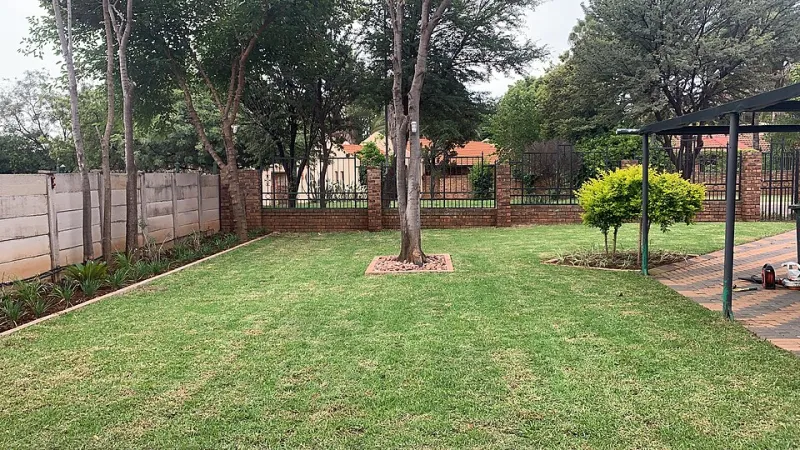
It starts innocently enough. You need a bag of compost, maybe a replacement for the basil that didn't make it. You tell yourself — out loud, possibly to another adult — that you are just looking. Thirty minutes later you're loading a flat of perennials into your trunk and doing the mental math on whether the back corner of your yard could technically support one more raised bed.
If this sounds like your Saturday, you are not alone. Plant people have been pulling this move since the first market stall sold seedlings in ancient Rome. And while it's easy to chalk it up to a lack of willpower, what's actually happening is a little more interesting than that.
The Nursery Is Designed to Do This to You
Let's be honest about the environment for a second. A well-run nursery — and we'd like to think we qualify — is basically a sensory experience engineered to make you feel good. The smell of damp soil, the riot of color, the satisfying weight of a healthy root ball. Your brain is registering all of it as abundance, and abundance feels safe. It feels like home.
There's genuine research suggesting that being around plants lowers cortisol levels and activates the same reward pathways as other pleasurable activities. So when you're wandering the perennial section and you feel inexplicably calmer than you did in the parking lot, that's not imagination. Your nervous system is genuinely responding to the greenery around you.
The result? Your decision-making is softened. You're relaxed. You're open. That's a great state for making friends and a slightly dangerous one for your credit card.
The Collector's Logic (And Why It Holds Up)
Plant collecting has its own internal grammar, and once you understand it, the purchases start to feel less impulsive and more... inevitable.
Gardeners talk about filling gaps — that blank stretch of border that needs something with late-summer interest. They talk about rounding out a palette — you have all this cool blue and silver, but nothing to bridge it to the warm tones near the fence. They talk about completing a collection — you have six of the seven native grasses the region supports, and leaving that seventh out there in the world, unpurchased, feels genuinely irresponsible.
None of this is irrational. It's the same logic that drives people to finish a book series or complete a puzzle. The human brain loves completion. Gardens, by their nature, are never quite complete, which means the collector's logic has essentially no ceiling.
The Emotional Math of Plant Parenthood
Here's something that doesn't get talked about enough: plants are deeply satisfying to care for, and that satisfaction creates a feedback loop.
You bring home a struggling clearance-rack fern. You repot it, water it correctly, find it the right window. Three weeks later it pushes out new growth. That moment — that tiny unfurling frond — delivers a hit of genuine pride that is completely out of proportion to the effort involved. And your brain files that away. Plants make me feel capable. Plants make me feel successful. I should get more plants.
For a lot of people, especially those who've had a rough stretch at work or feel like life is generally outside their control, a thriving plant collection is proof that they can nurture something. That they have good instincts. That things grow when they take care of them. That's not a trivial thing to feel.
The Guilt Is Real, But So Is the Justification
Of course, not every plant purchase ends in triumph. Some of them end in a dried-out husk you quietly move to the back of the shelf and try not to make eye contact with. And the accumulation of plants you haven't quite figured out yet — the ones in pots that aren't quite the right size, the ones waiting for a permanent spot that hasn't materialized — can start to feel less like a collection and more like a responsibility you didn't fully think through.
This is where a little honest planning goes a long way.
Before you buy, ask yourself three questions:
Do I have a spot for this? Not a theoretical spot. An actual place in your yard or home where the light, drainage, and spacing work for this specific plant. If you have to think for more than ten seconds, the spot probably doesn't exist yet.
Do I have time for this one's learning curve? Some plants are forgiving. Others require you to become a specialist. If your plate is already full, a high-maintenance acquisition is going to end in frustration for both of you.
Am I buying this because I want it, or because it's on sale? Clearance plants are a great deal when they're genuinely something you'd have bought at full price. They're a bad deal when the only thing that changed is the sticker.
Answer those honestly and you'll find you still bring home plenty of plants — just the ones that actually belong in your life.
Building a Collection That Earns Its Space
The best plant collections aren't the biggest ones. They're the most intentional ones. There's a real difference between a yard that feels abundant and joyful and one that feels chaotic and overwhelming, and that difference usually comes down to whether the plants were chosen or just accumulated.
A few things that help:
Give yourself a theme, even a loose one. It could be natives only, or plants that attract pollinators, or a color palette, or edibles mixed with ornamentals. A loose organizing principle makes every new purchase feel like it belongs to something larger.
Keep a running wish list. When you see something at the nursery that catches your eye but doesn't fit your current plan, write it down instead of buying it immediately. If you're still thinking about it two weeks later, it might be worth making room for. If you've forgotten it entirely, that's useful information too.
Let go of the ones that aren't working. A plant that's struggling in the wrong spot isn't a failure — it's a mismatch. Pass it along to a friend with different conditions, or compost it without ceremony. Holding onto plants out of guilt keeps you from making space for the ones that'll actually thrive.
The Real Reason You Keep Coming Back
At the end of the day, the nursery habit isn't really about plants. It's about optimism. Every time you bring something home, you're making a small bet on the future — that you'll have time to tend it, that your yard will evolve the way you're imagining, that this season will be the one where everything comes together.
That's a pretty good thing to be addicted to.
So go ahead, come browse. We'll have the good stuff up front.