Someone Else's Garden: A Practical Guide to Making Inherited Landscaping Your Own
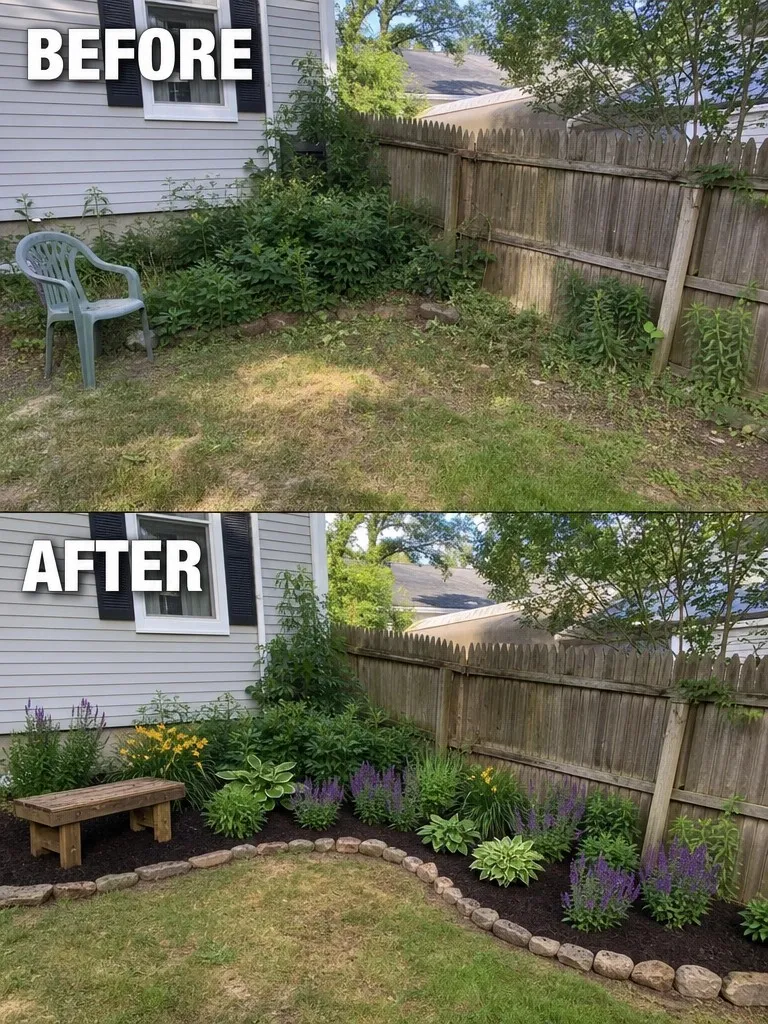
Photo: homeowner assessing overgrown backyard garden mature landscaping, via mygardeningstories.com
Buying a home with mature landscaping feels like a bonus — until you're standing in the backyard in early spring wondering what half these plants even are, why the previous owners planted a burning bush the size of a compact car next to the patio, and whether that weedy-looking patch by the fence is a wildflower meadow or just... a mess.
Inherited gardens are one of the most common landscaping challenges homeowners face, and yet there's surprisingly little guidance out there for navigating them. The instinct is often to either bulldoze everything and start fresh (expensive, wasteful, sometimes regrettable) or do nothing and just live with a space that never quite feels like yours. There's a much better path between those two extremes.
Slow Down Before You Dig Anything Up
If you moved in during fall or winter, here's the most important thing we can tell you: wait. A garden in dormancy is almost impossible to read accurately. That bare patch might be a stunning peony bed come May. Those scraggly sticks could be a row of roses that bloom magnificently in June.
Garden designers and experienced gardeners often recommend giving a new property at least one full growing season before making major changes. Watch what comes up, when it blooms, and how it performs across different weather conditions. Take photos monthly. You'll learn more from one full year of observation than from any amount of guessing in January.
That said, you don't have to be completely passive. Use that first season to make notes, pull obvious weeds, do basic maintenance, and start forming a vision. Just hold off on the chainsaw.
Build a Simple Inventory
Once things start leafing out, do a walkthrough with your phone and photograph everything. Don't worry about identifying every plant immediately — just document what's there and where it sits in relation to the house, fence lines, and sun exposure.
Then start sorting what you find into three rough buckets:
Keep: Established trees, healthy shrubs with good structure, perennials you genuinely like or that have obvious ecological value (think established natives or anything that's already attracting wildlife).
Evaluate: Plants that are overgrown, in the wrong spot, or that you're on the fence about. These stay for now but go on the watch list.
Remove: Invasive species, plants that are diseased or structurally compromised, and anything that's fundamentally incompatible with your vision. In the US, common inherited invasives include English ivy, Japanese barberry, burning bush (Euonymus alatus), and Bradford pear trees. These should be prioritized for removal.
Not sure what you're looking at? Bring photos into Frankie's or use a plant ID app as a starting point. We're happy to help you sort through what's worth keeping.
Respect What Mature Plants Actually Represent
Here's a perspective shift that can save you a lot of money and regret: a twenty-year-old Japanese maple or a well-established lilac hedge represents decades of growth you'd have to pay a significant premium to replicate. Even if it's not exactly where you'd have put it, ask yourself whether the issue is the plant itself or just the context around it.
Sometimes removing competing plants, doing a proper rejuvenation prune, or simply cleaning up the surrounding area can completely transform how a mature plant reads in the landscape. A lilac that looks scraggly and neglected often just needs some air and a hard prune after bloom to become a genuine feature.
Before removing anything large and established, get a second opinion. We've seen homeowners take out healthy specimens they later deeply regretted, especially trees that were providing meaningful shade or privacy screening.
Plan Your Changes in Phases
One of the biggest mistakes people make with inherited gardens is trying to transform everything at once. Beyond the financial hit of doing it all in one season, it's also just hard to make good decisions when you're working at that scale.
A phased approach works much better. In year one, focus on removals — get rid of the invasives, cut back the overgrown shrubs, and clear the beds of accumulated debris. This alone will dramatically change how the space feels and give you a cleaner canvas to work with.
Year two is a good time to start introducing your own plants. Fill gaps left by removals, add new perennial layers, and begin shaping the style and palette you actually want. By working incrementally, you're also spreading out the cost, which matters when you've just taken on a mortgage.
Year three and beyond is when you refine — add the focal points, the specialty plants, the design elements that make the garden feel fully yours.
Timing Matters More Than Most People Realize
When you do make moves, timing plant removals and transplants correctly can mean the difference between success and a lot of dead plants.
For most shrubs and perennials, early spring (before significant new growth) or fall (after temperatures cool but before hard frost) are the safest windows for transplanting. If you want to relocate something rather than remove it entirely, mark it while it's in bloom so you know exactly what it is, then move it during a more favorable season.
Tree removal is largely season-agnostic from the tree's perspective, though spring and fall are still generally preferred. For diseased trees, don't wait — address those promptly regardless of season.
Borrow What Already Works
Here's the part of inherited garden design that doesn't get enough credit: the existing landscape can actually tell you a lot about what will work in your specific yard. If something has been thriving for years in a particular spot, that's meaningful data. The soil, drainage, sun exposure, and microclimate in that location clearly suit that type of plant.
Use that information. If there's a healthy, blooming astilbe in a shaded corner, you know that corner supports shade-tolerant, moisture-loving plants. Add more of those instead of fighting the conditions. Work with the intelligence the previous garden is already demonstrating.
Make It Feel Like Yours, One Season at a Time
The goal isn't to erase the history of a garden — it's to layer your own story on top of it. Some of the most interesting residential landscapes are ones that carry traces of multiple eras, where a decades-old magnolia anchors a bed of newer plantings that reflect the current owner's taste.
At Frankie's, we love helping homeowners navigate exactly this kind of project. Whether you need help identifying what you've got, figuring out what to remove, or planning the next phase of your garden's evolution, we're here for all of it. Come find us — and bring those photos.